Gold Coast Light Rail Stage 4: What Happened and What It Means for the Southern Gold Coast
Cancelled 1 September 2025. Proposed route: Burleigh Heads to Coolangatta, 13 km. Why it was axed and what comes next.

Gold Coast Light Rail Stage 4: What Happened and What It Means for the Southern Gold Coast
Status: CANCELLED — 1 September 2025 Proposed Route: Burleigh Heads → Palm Beach → Currumbin → Tugun → Coolangatta (13 km) Projected Cost at Cancellation: $5.7 billion – $9.85 billion
The Decision
On 1 September 2025, the Queensland Crisafulli Government officially cancelled all planning for Gold Coast Light Rail Stage 4 — the proposed 13-kilometre extension running south from Burleigh Heads through Palm Beach, Currumbin, Tugun, and Coolangatta to the Gold Coast Airport.1,2
Deputy Premier Jarrod Bleijie announced the decision, stating that proceeding with Stage 4 was not in the public interest.3 The Queensland Government confirmed there will be no further planning for the project.4
What Was Stage 4?
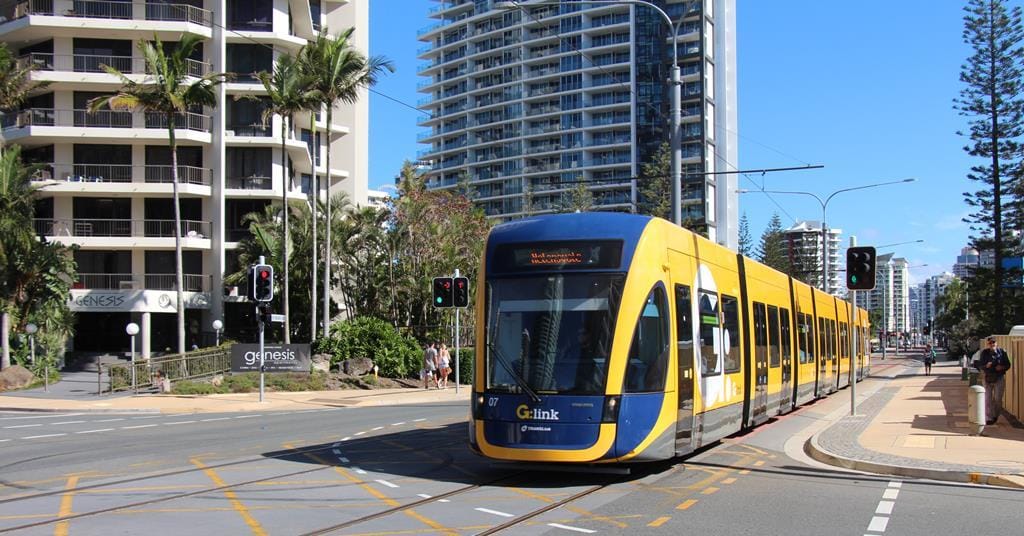
Stage 4 was the proposed southern continuation of the G:link light rail network. From the new Stage 3 terminus at Burleigh Heads, it would have run approximately 13 kilometres through:
- Palm Beach - Currumbin Waters / Currumbin - Elanora - Tugun - Bilinga - Coolangatta (near Gold Coast Airport)
The alignment would have run primarily along the Gold Coast Highway, with nine proposed stops including Gold Coast Airport — which services more than 6 million passengers annually.4
Stage 4 had been listed in infrastructure planning documents since at least 2019. The previous Labor government had progressed it through early planning phases, and it was included in the infrastructure pipeline for the 2032 Brisbane Olympic Games transport plan.
Why Was It Cancelled?
The independent review — undertaken by the Department of State Development, Infrastructure and Planning — assessed cost estimates, project deliverability, alternative routes and modes, and community feedback.5 It identified five major issues:
1. Cost Had Blown Out Severely
Projected costs had escalated to between $5.7 billion and $9.85 billion, up from earlier estimates of $3.1 billion to $7.6 billion.3,5 The review found that material costs had increased by 4.3% on average over the preceding 12 months and were 30% higher than three years earlier.5 The revised upper-end figure made Stage 4 one of the most expensive pieces of transport infrastructure ever proposed for Queensland.
2. Community Opposition Was Significant
The review received 5,662 submissions. Approximately two-thirds of respondents opposed the extension.5 A significant proportion said they had not been adequately consulted by the previous Labor government during earlier planning phases.
3. Environmental and Amenity Concerns
The proposed alignment raised serious concerns including: - Potential impacts on Tallebudgera Creek and Currumbin Creek crossings - Loss of beachside car parking spaces - Property resumptions along the alignment
4. Olympic Games Timeline Was "Problematic"
Despite Stage 4 being partly conceived to serve the 2032 Olympics, Deputy Premier Bleijie stated that completing the project before the Games appeared "problematic."3 There was also no money allocated for Stage 4 in the state budget.
5. Skilled Worker Shortage
Queensland's construction industry was already under significant pressure from a large pipeline of projects. A Stage 4 build would have competed for scarce skilled labour with other priority projects including the Cross River Rail, Logan and Gold Coast Faster Rail, and Olympic venues.3
What Replaces Stage 4?
The government committed to:4,5
- Enhanced bus services across the southern Gold Coast corridor — with a new bus depot at Burleigh Heads to handle approximately 11,000 daily commuters - Bus priority measures on key corridors to reduce travel times where possible - A broader regional transport study examining the southern Gold Coast as a whole — looking at airport connectivity, alternative transport routes, and intermodal options, including the possibility of a heavy rail link to Gold Coast Airport - Ongoing community consultation as part of the transport study process
The transport study is not expected to conclude and produce actionable recommendations until at least 2027.
The Response: Criticism and Support
Opposition to the Decision
- Australasian Railway Association CEO Caroline Wilkie: "Buses simply won't deliver the benefits light rail has to offer and will not be able to keep up with growing demand for transport services in the region."6 - Labor Opposition Leader Steven Miles called the decision "an act of economic vandalism." - Advocacy groups pointed out that the southern Gold Coast is one of the fastest-growing parts of Australia, and a bus-only approach was inadequate long-term.
Support for the Decision
- Many local residents opposed property resumptions and parking losses - Critics of the previous planning process noted the lack of genuine community consultation - Some commentators argued that the cost estimates had become untenable given competing priorities in the Queensland budget
What This Means for Property Owners in the Southern Gold Coast
Suburbs Affected: Palm Beach, Currumbin, Tugun, Coolangatta, Bilinga, Elanora
For property owners in these suburbs, the cancellation has material implications:
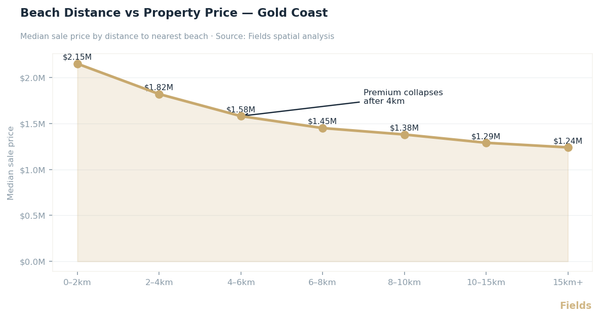
The light rail premium will not arrive. Research consistently shows that properties within 500 metres of active light rail stations achieve meaningfully stronger price growth over time than those further away. That structural uplift — which Miami, Nobby Beach, and Burleigh Heads are now in line to receive — will not flow to Palm Beach or further south.
Airport connectivity remains car and bus-dependent. For property investors and residents who valued the potential for car-free access to a major international airport, that scenario has been deferred indefinitely.
The transport study provides no certainty. While the government study process is positive, it will not produce a committed project with a funding envelope and construction start date. Palm Beach and Coolangatta residents are looking at a minimum of 5–10 years before any alternative rapid transit infrastructure could realistically be delivered.
Bus enhancements are real but limited. Improved bus frequency and priority measures on the Gold Coast Highway corridor will provide tangible day-to-day improvements. But buses on congested arterial roads cannot replicate the capacity, reliability, or perceived amenity of rail.
The Bigger Picture: Southern Gold Coast Transport Gap
With Stage 4 cancelled, the transport map for the southern Gold Coast looks like this by 2032:
| Suburb | Public Transport Access (post-2026) |
|---|---|
| Burleigh Heads | Light rail (new terminus) + bus connections |
| Miami | Light rail (new station) |
| Palm Beach | Bus only |
| Currumbin | Bus only |
| Tugun | Bus only |
| Coolangatta | Bus only |
| Gold Coast Airport | Bus only (no rail) |
This stands in contrast to the 2032 Olympic transport plans, which anticipated light rail or rapid transit serving the full southern Gold Coast corridor for Games movements.
Stage 3: Proceeding as Planned
Construction between Miami and Burleigh Heads continues. In November 2025, the first tram began testing on Stage 3 tracks — a significant milestone.7 Passenger services are targeted for mid-2026.
What to Watch
- Regional transport study findings (expected 2027) — will determine whether any alternative rapid transit solution is proposed - Bus service improvements — frequency and reliability upgrades are committed; the detail and timeline of delivery will matter - 2032 Olympics transport planning — how the Games organisers plan to move people to and from Coolangatta and the airport without rail - Heavy Rail Extension (Varsity Lakes to Gold Coast Airport) — under consideration as part of the regional transport study, but any delivery is long-term. See separate article.
Sources
1. Railway Gazette International (2025) Gold Coast light rail Stage 4 cancelled, Railway Gazette International. railwaygazette.com 2. Gold Coast Light Rail (2025) Gold Coast Light Rail Stage 4 Cancelled, goldcoastlightrail.com.au. goldcoastlightrail.com.au 3. Rail Express (2025) Queensland Government axes Gold Coast Light Rail extension, Rail Express. railexpress.com.au 4. Department of Transport and Main Roads (2025) Gold Coast Light Rail Stage 4, Burleigh Heads to Coolangatta, planning, Queensland Government. tmr.qld.gov.au 5. Department of State Development, Infrastructure and Planning (2025) Gold Coast Light Rail Stage 4, Queensland Government. statedevelopment.qld.gov.au 6. Australasian Railway Association (2025) Gold Coast Light Rail Stage Four cancellation represents missed opportunity for Queensland, ARA. ara.net.au 7. Queensland Government (2025) First tram on tracks marks major milestone for Gold Coast Light Rail Stage 3, Ministerial Media Statements. statements.qld.gov.au
Article first published: February 2026. Last reviewed: 2 March 2026. Next review triggered by: regional transport study findings (est. 2027); any future government announcements on southern Gold Coast transit.
Disclaimer: The information in this article is for general informational purposes only and does not constitute financial, investment, or valuation advice. Fields Real Estate (Licence No. 4832971) makes no warranty as to the accuracy or currency of data published. Readers should conduct their own due diligence and seek independent professional advice before making any property or investment decision. Read our full disclaimer →